If you’ve heard the claim that “blogging is dead,” you’ve been misinformed.
The truth is, blogging isn’t just alive—it’s evolving.
The landscape has changed, but that’s not a death sentence. In fact, for the entrepreneur or creator who’s willing to adapt, it’s an opportunity. The rules are shifting, AI is rewriting search habits, and audiences are consuming content in new ways. But the fundamentals—high-value writing, relationship-building, and consistent publishing—still drive results.
Many of the smartest creators I know are leaning into strategies that blend timeless fundamentals with emerging opportunities.
They’re not chasing trends blindly; they’re refining what already works and weaving in new tools and techniques that expand their reach.
If you’re new here, and don’t know me, you can learn more about my blogging background from StarterStory, NichePursuits, and by googling my name– but essentially I ran a blogging business from 2017 to 2024, and still own quite a few of those assets today.
My blogging portfolio peaked at just over $40,000 per month in revenue from Mediavine Ads. So I’m not new to blogging, that is the point I am trying to make.
Here’s what’s actually working for blogging traffic right now—and what you can start doing to stay ahead in 2025.
Deep, Intent-Focused Content
Let’s get this out of the way: long-form content still wins.
According to the latest research, 75% of marketers report that posts over 2,000 words attract the most traffic. This isn’t because people love scrolling endlessly—it’s because long-form articles have the space to answer multiple angles of a question, include deeper detail, and keep readers on the page longer.
But here’s the nuance: length alone won’t cut it. The highest performers are laser-focused on search intent. They’re writing not just “about” a topic, but for a specific reader who’s in a specific stage of their journey. That means:
- Anticipating follow-up questions and answering them in the same piece.
- Using examples, visuals, and context to clarify complex ideas.
- Eliminating fluff so the word count serves the reader, not the ego of the writer.
This intent-driven approach is what turns blog traffic into engaged subscribers or customers.
Multimedia and Visual Engagement
The days of plain text dominating search are long gone.
In 2025, 80% of marketers say they plan to integrate more video into their blog posts—and it’s not just because video is trendy. Video increases dwell time, keeps people engaged, and appeals to different learning styles.

Beyond video, images, infographics, and interactive elements all help make a post “sticky.” A blog that pairs written expertise with multimedia assets feels more premium, builds more trust, and earns more shares.
Think about it like this: if your blog post is a dinner party, multimedia is the great wine, music, and plating that turns a meal into an experience.
AI-Enhanced Optimization and Content Innovation
AI isn’t replacing skilled bloggers—it’s giving them leverage.
AI SEO tools now handle a lot of the heavy lifting for:
- Keyword ideation
- Outline generation
- Internal linking suggestions
- Quick rewording for clarity or tone
The key is to let AI handle the routine work while you focus on injecting your unique insight and personality. If your blog reads like it could have been written by a bot, it won’t stand out. If it reads like you, but with AI-enhanced depth and structure, it will.
The winners in 2025 will be those who blend machine efficiency with human authenticity.

Technical Performance and User Experience
Google has made it clear: your content can be brilliant, but if your site is slow or hard to use, it won’t rank.
Core Web Vitals remain firm ranking factors:
- LCP (Largest Contentful Paint) under 2.5 seconds
- FID (First Input Delay) under 100 milliseconds
- CLS (Cumulative Layout Shift) under 0.1
Mobile-first design, accessibility, and clear navigation are now table stakes. Accessibility isn’t just a moral win—it’s an SEO advantage, because it helps search engines understand your content better.
Backlinks and Authority
There’s no shortcut here: backlinks still matter. In fact, top-ranking pages have nearly four times more backlinks than the rest.
Blogging can generate these backlinks organically by publishing linkable assets—think ultimate guides, original research, or resources that people in your niche naturally want to reference.
The best backlink strategies in 2025 combine:
- Publishing highly linkable content.
- Building relationships with other creators and site owners.
- Leveraging tools like Ahrefs or Semrush to identify outreach opportunities.
AI-Aware SEO: AEO and GEO
Two newer acronyms you need to know:
- AEO (Answer Engine Optimization): Structuring content to win featured snippets, voice search answers, and FAQ boxes.
- GEO (Generative Engine Optimization): Positioning your site so that AI-generated search summaries (like Google’s AI Overviews or ChatGPT’s Browse mode) cite you as a source.

If your blog is invisible in these AI-driven results, you’re missing a huge share of future search traffic.
Promotion, Updates, and Cross-Channel Visibility
Great content deserves a great distribution plan.
That means:
- Regularly updating older posts so they stay relevant.
- Sharing posts on social platforms where your audience already hangs out.
- Integrating email marketing so your posts reach your subscribers directly.
In other words, “publish and pray” is no longer a viable strategy.
Strategy Integration and Measurement
One of the more encouraging stats from last year: 50% of marketers reported higher ROI from blogging than the year before. But they weren’t measuring success by vanity metrics like raw traffic—they were tracking conversions tied to business results.
That could mean:
- Email subscribers
- Qualified leads
- Affiliate conversions
- Bookings or sales
If you’re not tying blog output to revenue-related metrics, you might be “busy” without being effective.
Tool Smarts
The right tools multiply your output:
- For keyword and competitive research: Semrush and Ahrefs still lead.
- For content optimization: SurferSEO and MarketMuse.
- For backlink strategies: again, Ahrefs and Semrush.
If you don’t have budget for premium tools, start with Google Keyword Planner, free SEO extensions, and your site’s own analytics—then invest as results justify it.
Quick Wins to Implement Now
- Publish or refresh long, in-depth posts (2,000+ words).
- Add video or visuals to improve engagement.
- Run a Core Web Vitals test and fix problem pages.
- Use a keyword research tool to refine your next topic list.
- Structure your content for AEO and GEO visibility.
- Build backlinks by offering valuable, link-worthy resources.
- Refresh older posts to maintain rankings.
- Track conversions—not just pageviews.
Where to Go Next
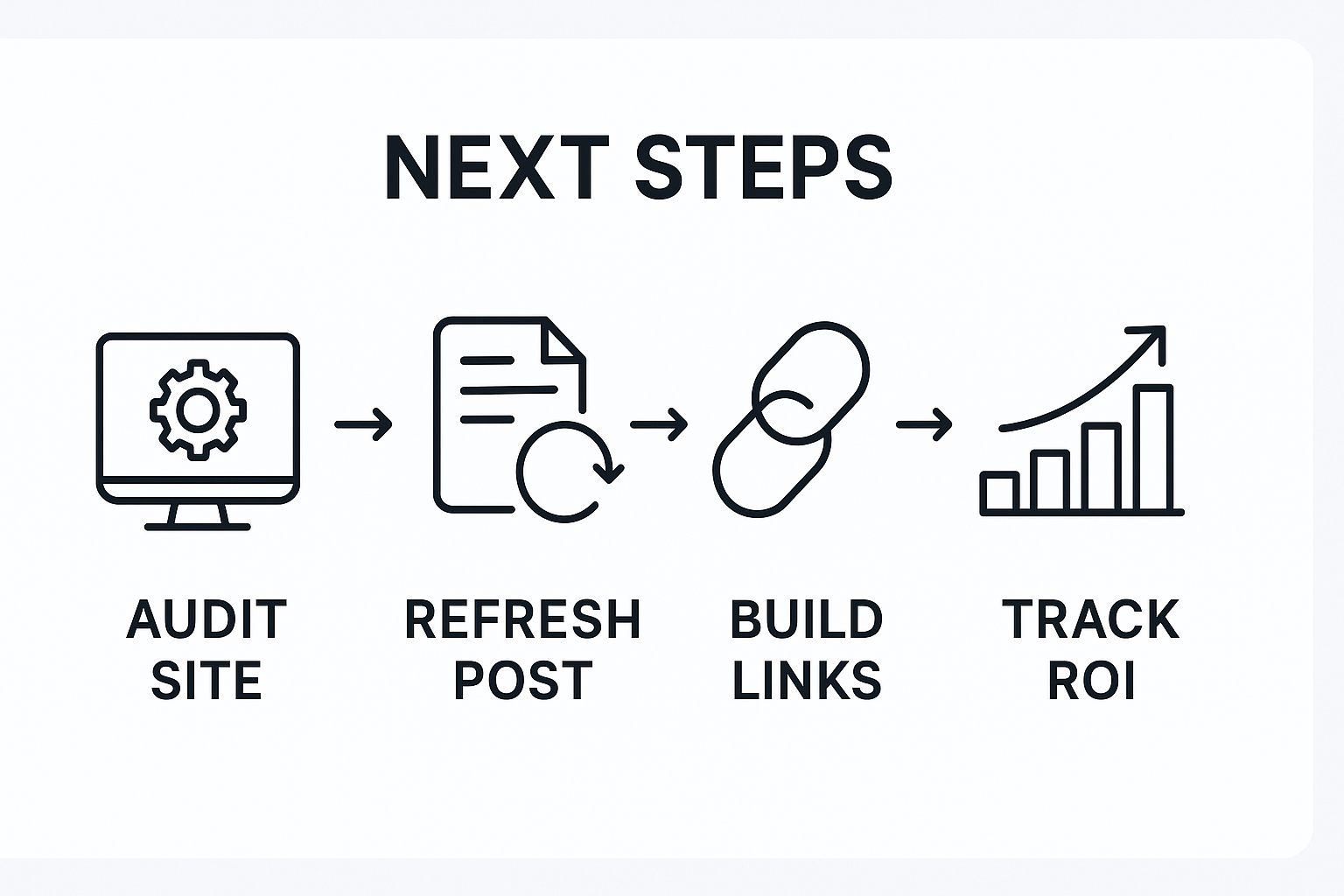
- Audit your site’s performance—speed, mobile-friendliness, and accessibility.
- Pick one flagship post to refresh—update stats, embed a video, format for snippets.
- Plan your next high-value post—aim for depth and clear search intent.
- Use AI tools for research—keep your voice in the final output.
- Build genuine backlink relationships—reach out to sites in your niche.
- Shift your success metrics—from traffic volume to ROI-driven outcomes.
Bottom line: blogging in 2025 rewards the thoughtful strategist. If you blend proven SEO principles with AI-aware tactics and an authentic voice, you can still turn your blog into a business growth engine.
Sources:
HubSpot’s 2025 State of Blogging Report
Mastering SEO in 2025 – Passionfruit
SEO Strategies 2025 – Abdullah Babu
Blogging Statistics – Red Search
Franetic Blogging Insights
Answer Engine Optimization – Wikipedia
Generative Engine Optimization – Wikipedia
InBlog AI – Blogging Stats
HubSpot Marketing Blog
TechRadar SEO Tools
TechRadar Link Building
Digital Bloom Hub – Smart SEO Roadmap
Host Advice – Blogging Statistics
Questinate – SEO Strategy 2025
The Scale Rankings – SEO Strategies Guide